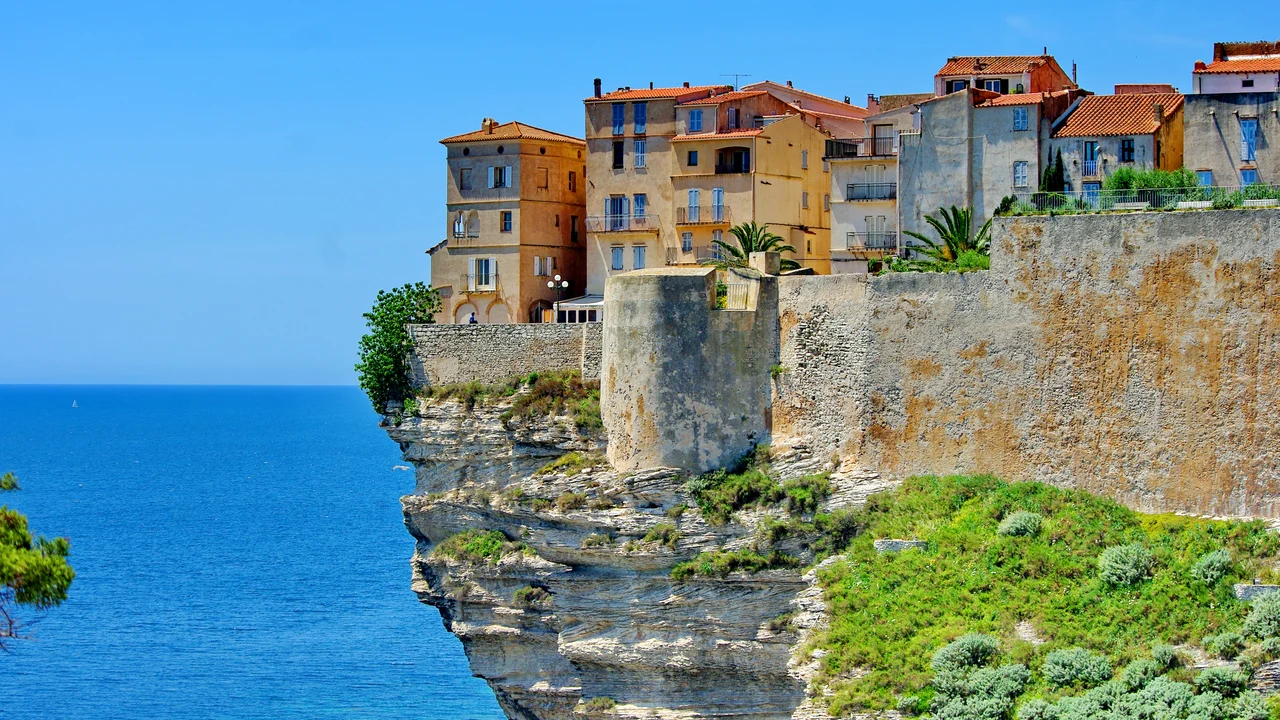
Corsica uses the euro — that's the easy part. What's less obvious: a combination of French payment culture and Corsican character means cards work nearly everywhere, but not always smoothly, and in small places cash is just more practical than card.
The currency: euro
Corsica is part of France and uses the euro (€). No exchange offices needed if you're from a euro country. From the UK, US or Switzerland, exchanging at the airport or at a bank in Bastia/Ajaccio is the easiest.
Card vs cash: what works where
Cards work in most places — supermarkets, restaurants in tourist towns, hotels, campsites, fuel stations, attractions, ferries. Visa and Mastercard are accepted almost everywhere. Amex and Diners are a different story: petrol stations and large supermarkets usually take them, smaller places often don't.
Cash stays handy for:
- Small restaurants and bars in mountain villages — some simply don't have a card terminal, or the minimum-spend threshold is high
- Local markets — cheese, charcuterie and fruit stalls almost always cash only
- Parking meters — some new ones do cards, older ones coins only
- Wineries — at tastings you often leave with a bottle, and payment can be cash
- Beach bars in the Agriates or at less-touristy beaches
- Gîtes and small rooms — some want cash for the final settlement, especially in the countryside
- Tips — small amounts for waiters or guides
Tip Keep at least €100 cash in your wallet, with at least a couple of €10 and €20 notes. €50 notes get accepted, €100+ notes are often a problem for change in smaller places.
ATMs
Cash machines — in France distributeurs automatiques de billets or DAB — exist in:
- All larger towns: Bastia, Ajaccio, Calvi, Corte, Porto-Vecchio, Bonifacio, L'Île-Rousse, Saint-Florent, Sartène, Propriano. All have multiple banks side by side.
- Mid-sized towns: usually one or two ATMs at the central square's bank.
- Small villages: sometimes none at all. Bear that in mind heading into the Castagniccia, the mountains around Bavella, or the interior.
Banks on Corsica: Crédit Agricole, BNP Paribas, Société Générale, Banque Populaire, La Banque Postale (in post offices). All accept standard European bank cards.
Costs: within the eurozone, free with most cards. Outside the eurozone, allow €2-5 per withdrawal plus possible exchange fees.
Petrol stations: a special case
On Corsica there are three kinds of fuel stations:
- Manned stations with a till — card or cash, usually no problem
- 24-hour automatons at closed stations — card only, and not all foreign cards work. Some refuse certain Dutch debit cards, for example
- Supermarket stations (E.Leclerc, Carrefour) — often cheaper, and accept most cards
Tip Don't refuel late at night in a remote area unless you know it's a 24-hour station that takes your card. In the interior many stations close at 19:00 — outside that, you depend on automatons that can be picky. Always fill up before heading inland.
Contactless
Contactless on Corsica works the same as in mainland France. Almost every terminal supports it, with a €50 limit per transaction. Above that you'll be asked for your PIN. Apple Pay and Google Pay work normally.
Tipping
In France and Corsica, service is included — the menu price is what you pay. A tip is not required, but it's appreciated:
- Restaurants: €1-3 per person for good service, or a few euros rounded up
- Cafés/bars: small change on the table or none — both are normal
- Taxis: round up
- Walking guides or boat skippers: €5-10 per person for a half day is a fair gesture
What things cost
For a current overview see the costs and budget page. Roughly:
- Espresso at the bar: €1.50-2.50
- Pizza in a trattoria: €10-14
- Lunch menu in a restaurant: €18-25
- Dinner with wine: €30-50 per person
- Litre of petrol: €1.95-2.20 (slightly pricier than the mainland)
- Sunbed-and-parasol set: €15-25 at the better-known beaches
- Boat trip to Lavezzi: €30-40 per person
How much cash to bring
For a week on Corsica using cards for most things:
- €150-250 cash is enough for most travellers
- Smaller groups: less; families or longer stays: more
- Top up at any time at ATMs in the larger towns
Tip Split cash and cards across two places (some in your wallet, a backup card and some cash in another bag or in the hotel safe). It sounds excessive, but if your wallet vanishes on a busy market or on the beach, you'll thank your backup plan.
What you no longer need
Traveller's cheques — nobody takes them anymore.
Lots of cash from home — withdrawing with your normal card at a Corsican ATM is usually cheaper and more convenient than carrying large sums.
A separate holiday account — not necessary unless you find it useful for budgeting.
In case of loss or theft
- Call your bank immediately to block the card — international numbers are often on the back of the card or in the bank app
- File a police report for insurance. Call 17 or visit the gendarmerie in the nearest larger town. They'll usually take English-language reports without trouble
- Travel insurance — most insurers require a police report for the claim