Why Corsica is the best motorcycle island in Europe
Corsica is to motorcyclists what powder is to skiers: the perfect terrain. More than 1,000 kilometres of mountain roads, hairpin bends with views of the sea, cols where you're the only one, and tarmac that — let's be honest — is sometimes brilliant and sometimes just a little too exciting. But that's part of the charm.
The island is compact enough to ride a full loop in two weeks, yet varied enough to see something different every day. In the morning you're riding through a pine forest at 1,400 metres, in the afternoon you're standing on a beach with turquoise water. That contrast is what makes Corsica so special.
The best roads
D84 — Calvi to Porto via the Col de Vergio
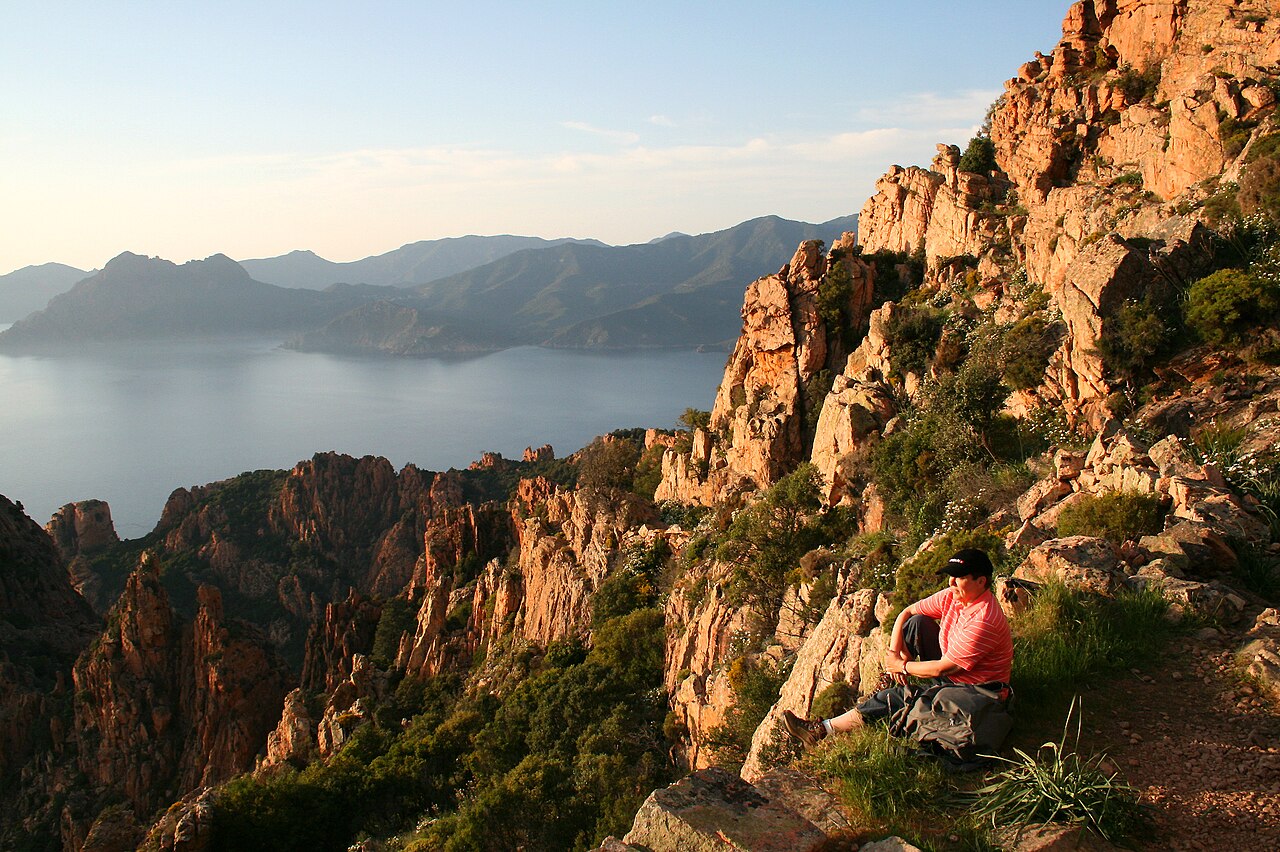
The queen of Corsican roads. From Calvi you climb inland, over the Col de Vergio (1,477 m) and then descend through the Aïtone forest towards Porto. The view of the Calanques de Piana from above is unforgettable. Allow half a day — not because it's far, but because you'll want to absorb every kilometre.
D268 — Route de Bavella
The Col de Bavella (1,218 m) is spectacular. Sharp rock spires, wind-sculpted pine trees, and a road that winds its way up in tight bends. From the south (Solenzara) the ride is at its best.
D80 — Coastal road along Cap Corse
The northern tip of the island. Narrow, winding, with sea views on both sides. One of the few roads where you genuinely need to ride slowly — not because of the rules, but because you'd miss everything otherwise. And because there's sometimes a cow standing in the middle of the road.
D69 — Calanques de Piana
Short but incredible road through red-orange rock formations. Every bend is a postcard. In high season it can be busy with cars and coaches — early morning is when it's magical.
T20 — Corte to Ajaccio
Straight across the island, through the mountain pass at Vizzavona. Wide enough for relaxed riding, but with enough bends to keep you alert. A connecting route that's worth the journey in itself.
Practical tips
Cooling vest — essential in summer
In July and August temperatures easily exceed 35°C, especially on the coast and in the south. In motorcycle gear that's unbearable. A cooling vest (soak it, wring it out, wear it under your jacket) makes the difference between enjoying yourself and mere survival. I never ride without one now. Re-soak it at fuel stops and you'll stay comfortable all day.
Parking with a motorcycle
Parking is far easier on Corsica than in a car. In most villages and towns you can park for free in spots where cars don't fit — next to a terrace, in an alley, on a small square. In Bonifacio and Calvi, high-season attendants often let motorcycles park for free or right at the front. Just watch your side stand: on hot tarmac it sinks in. A flat stone or stand pad underneath saves hassle.
Fuel
Petrol stations are less frequent than on the mainland, particularly inland. Between Corte and Porto there's virtually nothing. Rule of thumb: fill up at every opportunity. With a 250-kilometre range you'll always be fine, but don't let it come down to the last 50.
Livestock on the road
Corsica has free-roaming livestock — cows, goats, pigs and the occasional donkey. They stand on the road, they lie on the road, and they're in no hurry. Expect them, especially inland and on the mountain roads. Honking doesn't help; riding slowly past them does.
Accommodation
Campsites with a tent
The cheapest option and for many riders the finest. A compact tent fits easily on the back of a motorcycle. Campsites on Corsica are generally well maintained, have hot water and are often in beautiful locations. Expect to pay €15–25 per night for one person with a motorcycle and tent. In high season, book ahead — popular sites like L'Oso near Porto-Vecchio fill up fast.
Hotels and guesthouses
Small hotels and guesthouses (often called auberge) are everywhere. Don't expect luxury, but do expect clean rooms, a good breakfast and often a swimming pool. Prices range from €50 to €100 per night in high season. Booking early is essential — in July and August everything is full.
Airbnb
A good middle ground between camping and hotel. In places like Calvi, Porto-Vecchio and Ajaccio you'll find apartments from €60–80 per night, often with a kitchen. Handy when you're staying a few nights in one place and want to cook for yourself.
Mix it up
The golden tip: alternate. A few nights camping, then a night in a hotel to do laundry and recharge, then back to the tent. That way you keep costs down and enjoy the best of both worlds.
Saving money
Avoiding tolls on the way down
French motorways are expensive — expect €50–80 in tolls between the Netherlands and Toulon. On a motorcycle you can dodge the péage barriers via the nationales (N-roads), but that takes more time. A middle ground: take the motorway to Lyon and then pick up the N7 along the Rhône. More scenic and cheaper.
Booking the ferry smartly
The ferry is the biggest single expense. Corsica Ferries is usually the cheapest. Tips:
- Book early (January/February for summer) for the best prices
- A day crossing is cheaper than an overnight, but you lose a riding day
- A seat (fauteuil) is fine for the day crossing; for the overnight, a cabin is worth it
- Check whether the motorcycle price includes the rider — some operators charge separately
Cooking for yourself
With an Airbnb or a campsite with kitchen facilities, you'll save a lot on food. The local markets (every morning in a different village) are fantastic: fresh cheese, charcuterie, fruit, bread. A market lunch costs a few euros and tastes better than any restaurant.
Crowds and timing
High season (mid-July to mid-August) is busy, especially on the coast and the popular roads. The D69 at Piana and the road to Bonifacio can be slow in August because of cars and campervans. But on a motorcycle you're more agile — you can always get past, and the most beautiful roads inland are quiet even in August.
The ideal period for motorcycling is June or September: warm enough to enjoy, quiet enough to have the roads to yourself, and everything is open. But August is still fantastic — you just share the island with a few more people.
What to bring
- Cooling vest — mentioning it again because it really is essential
- Tyre repair kit — garages are scarce inland
- Jump leads — just in case
- Flat stone or side-stand pad — for soft ground and hot tarmac
- Bungee cords or cargo nets — for shopping and loose items
- Sunscreen — you burn faster than you think, even through clothing on long days
- Fleece or thin jacket — the mountain passes are cool, even in summer
- Good earplugs — long days in the wind, your ears will thank you